Basketball Footwork Drills for Defense
Basketball footwork drills are essential for developing the lateral movement, acceleration, and deceleration skills needed for elite defensive performance. Proper footwork enables defenders to stay in front of offensive players, react quickly to changes in direction, and maintain balance throughout the game. This comprehensive guide covers the most effective footwork drills used by professional basketball players and coaches.
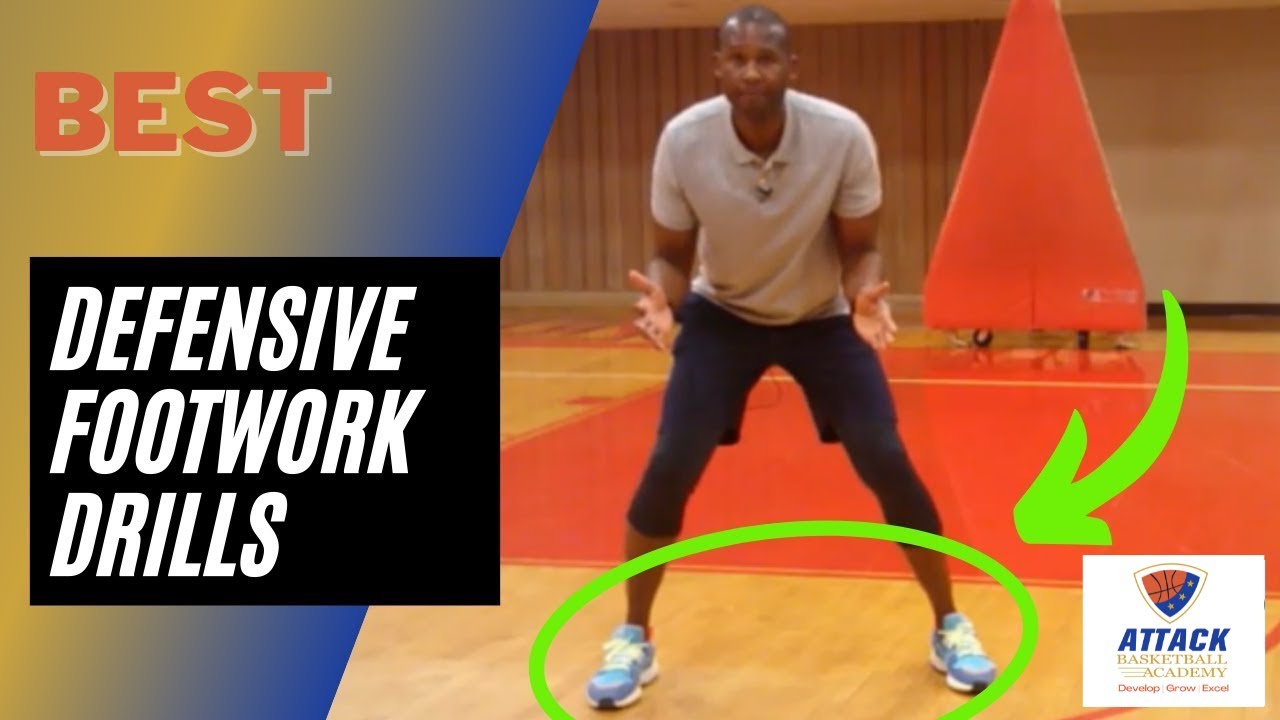
Importance of Defensive Footwork
Defensive footwork is the foundation of all defensive movements. Proper footwork allows defenders to:
- Maintain balance and control
- Generate explosive power for quick movements
- Stay in front of offensive players
- React quickly to offensive changes
- Prevent injuries through proper mechanics
Fundamental Footwork Techniques
The Defensive Slide
The defensive slide is the primary lateral movement in basketball defense. Execute the slide by:
- Starting in a low athletic stance
- Stepping laterally with your lead foot
- Pushing off your back foot to generate movement
- Keeping your feet shoulder-width apart
- Maintaining your defensive posture throughout
The Crossover Step
The crossover step allows defenders to change direction quickly. Execute by:
- Pushing off your outside foot
- Crossing your inside foot in front of your body
- Accelerating in the new direction
- Regaining your defensive stance
The Drop Step
The drop step helps defenders retreat quickly. Execute by:
- Pushing off your front foot
- Stepping backward with your back foot
- Maintaining your defensive posture
- Being ready to react to offensive moves
Essential Footwork Drills
Drill 1: Lateral Slide Drill
This fundamental drill develops lateral movement and control.
Setup: Place cones 20 feet apart on the baseline.
Execution:
- Start at one cone in defensive stance
- Slide laterally to the other cone
- Maintain low posture and active hands
- Complete 10 repetitions each direction
- Rest 30 seconds between sets
Progression: Increase speed, add directional changes, or have a partner move to simulate game situations.
Drill 2: Ladder Drill
Ladder drills improve foot speed and coordination.
Setup: Use an agility ladder or draw one with chalk.
Execution:
- Start at one end of the ladder
- Place one foot in each square
- Move through the ladder as quickly as possible
- Complete 5 passes through the ladder
- Rest 30 seconds between sets
Variations: Single-leg hops, lateral movement, backward movement, or combination patterns.
Drill 3: Cone Weave Drill
This drill develops agility and change-of-direction ability.
Setup: Place 5 cones in a line, 5 feet apart.
Execution:
- Start at the first cone
- Weave through the cones using crossover steps
- Maintain low athletic posture
- Complete 5 passes through the course
- Rest 30 seconds between sets
Progression: Increase speed, add backward movement, or have a partner defend.
Drill 4: Box Drill
The box drill develops multi-directional movement.
Setup: Create a 15-foot square with cones at each corner.
Execution:
- Start at one corner
- Sprint to the next corner
- Backpedal to the third corner
- Slide laterally to the fourth corner
- Complete 5 full rotations
- Rest 60 seconds between sets
Drill 5: Reaction Drill
This drill develops reactive footwork and decision-making.
Setup: Have a partner stand 10 feet away.
Execution:
- Start in defensive stance
- Partner points in a direction
- React immediately and move in that direction
- Complete 20 repetitions
- Rest 30 seconds between sets
Progression: Increase speed, add multiple directional changes, or simulate offensive moves.
Drill 6: Sprint and Decelerate Drill
This drill develops explosive acceleration and controlled deceleration.
Setup: Mark a 30-foot distance with cones.
Execution:
- Start at the first cone
- Sprint to the second cone
- Decelerate and stop under control
- Complete 10 repetitions
- Rest 45 seconds between sets
Advanced Footwork Drills
Defensive Slide with Ball Handler
Practice defensive footwork against a live ball handler. Focus on:
- Maintaining defensive position
- Reacting to offensive moves
- Staying low and balanced
- Using proper footwork throughout
Multi-Directional Movement Drill
Combine multiple footwork techniques in one drill:
- Slide laterally for 10 feet
- Backpedal for 10 feet
- Crossover step and accelerate for 10 feet
- Complete 5 full cycles
Game-Speed Footwork Drill
Execute footwork drills at game speed with game-like intensity. This develops the conditioning and muscle memory needed for sustained defensive performance.
Footwork Drill Progression
| Level | Focus | Drills | Duration |
|---|---|---|---|
| Beginner | Basic footwork mechanics | Lateral slides, ladder drills | 15-20 minutes |
| Intermediate | Multi-directional movement | Cone weave, box drill, reaction drill | 20-30 minutes |
| Advanced | Game-speed execution | Multi-directional, game-speed drills | 30-45 minutes |
Common Footwork Mistakes
Avoid these common errors when practicing footwork drills:
- Standing too upright: Reduces lateral movement and balance
- Crossing feet: Causes loss of balance and slow movement
- Poor weight distribution: Limits explosive power
- Inconsistent foot placement: Creates unpredictable movement
- Lack of intensity: Doesn't build game-speed muscle memory
Integrating Footwork into Your Training
Incorporate footwork drills into your regular training routine:
- Warm-up: Use footwork drills to warm up before practice
- Skill development: Dedicate 15-20 minutes to footwork drills
- Game preparation: Practice footwork at game speed before competition
- Cool-down: Use light footwork drills to cool down after intense activity
Frequently Asked Questions
How often should I practice footwork drills?
Practice footwork drills 3-5 times per week for optimal results. Consistency is more important than intensity; regular practice builds muscle memory and court awareness.
Can footwork drills improve my speed?
Yes. Footwork drills develop lateral quickness, acceleration, and deceleration. Combined with strength training, they significantly improve overall speed and agility.
What's the best time to practice footwork drills?
Practice footwork drills when you're fresh and alert. This is typically early in your training session, after a proper warm-up.
How long does it take to see improvement?
You should notice improvements in footwork and movement within 2-3 weeks of consistent practice. Significant improvements typically occur within 4-8 weeks.
Mastering basketball footwork drills is essential for becoming an elite defender. With consistent practice and proper technique, you can develop the lateral movement, agility, and speed needed to excel on the defensive end. Start incorporating these drills into your training routine today.